Ten Bucks, Three Hours: Inside the Quiet Rise of the Minimum-Bet Blackjack Player
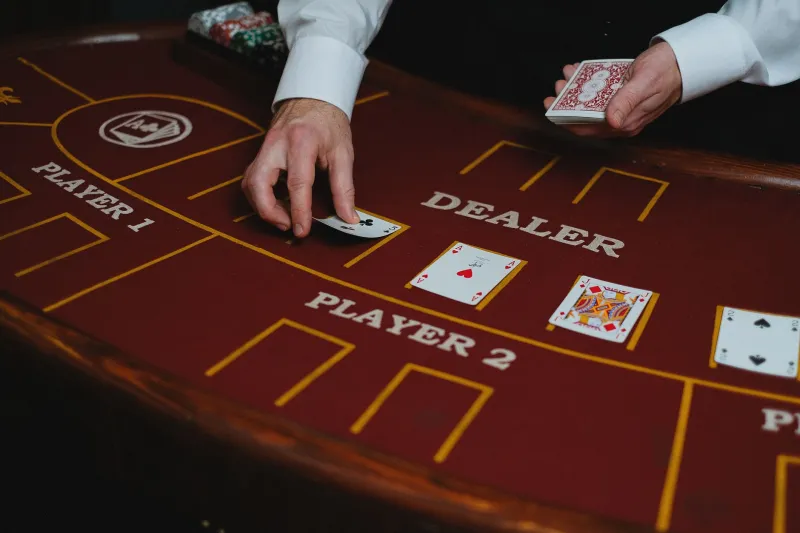
There's a particular kind of player you'll find at every $10 blackjack table in America. They've got a drink they didn't pay for, a stack of chips that never climbs above $40, and absolutely no intention of leaving until the shoe runs out or the cocktail waitress circles back. They're not chasing a mortgage payoff. They're buying an evening.
And honestly? They might be playing the smartest game on the casino floor.
The Low-Limit Renaissance Is Real
Walk into any tribal casino between Oklahoma City and Tulsa on a Tuesday night and you'll see it. Same story in Atlantic City, where the boardwalk pits have quietly re-embraced the low-roller after years of chasing whales. Even Vegas — long allergic to anything under $25 on the Strip — has watched downtown and locals' casinos thrive by keeping tables affordable.
Part of this is economics. Post-pandemic, casual players came back slowly, and operators learned that a full $10 table beats an empty $50 one. Part of it is cultural: a generation of players raised on mobile games and subscription entertainment treats a casino night like a movie ticket with better odds and free coffee.
The math backs them up. At a $10 table with decent rules and basic strategy, the house edge hovers around half a percent. Average hourly loss? A few bucks. That's cheaper than most hobbies, and considerably cheaper than the $12 craft cocktail you'll inevitably buy.
What the House Gives Up at Low Limits
Casinos aren't charities, but the lowest tables do come with genuine perks:
- Time. Your money moves slower. A $200 bankroll can fund an entire evening at $10 stakes; at $100 a hand, it might not survive a cold shoe.
- Free lessons in disguise. Low-limit dealers tend to be patient, and many will walk a newbie through basic strategy without judgment. Try asking for coaching tips at a high-limit salon.
- Comps without the spend. Your $10 an hour of theoretical loss still registers in the players club. Multiply that across a long session and the free buffet math starts working in your favor.
But let's be clear about what the house never gives up, even at the minimum:
- The rules quietly tighten. That $10 table is more likely to pay blackjack at 6:5 instead of 3:2, or hit soft 17, or restrict doubling. The discount comes with fine print — always check the felt before you sit.
- The edge never sleeps. Half a percent sounds trivial, but it compounds every hand. Playing small slows the bleed; it doesn't stop it.
- The atmosphere is engineered. Low-limit pits are loud, social, and deliberately fun. That's not generosity — it's retention. Bored players leave. Entertained ones stay four more hours.
Entertainment Budget, Not Income Plan
The healthiest thing about the new $10 crowd is their honesty about what the money is for. They're not "investing." They're not "grinding." They've decided that $60 for a night of cards, conversation, and complimentary drinks is a fair price for entertainment — the same way someone else might spend it on concert tickets.
That mindset does something powerful: it removes desperation from the equation. Chasing losses is the fastest way to turn a fun night into an expensive one. When your goal is time at the table rather than money out the door, a losing session still delivers exactly what you paid for.
Set two numbers before you sit down — a loss limit and a walk-away win. Then honor both. The players who last decades in this hobby aren't the ones who hit big once. They're the ones who never let one bad shoe wreck the month.
Small Stakes, Real Skills
Here's the underrated bonus of playing low: it's the cheapest classroom in gambling. Want to learn card counting? Basic strategy fluency? Bankroll discipline? Doing it at $10 a hand costs a fraction of what the same education runs at higher stakes. Plenty of sharp players got their reps at a $5 table in Reno or a smoke-filled Oklahoma card room long before they ever bet big.
So next time someone teases you about playing penny-ante blackjack, smile and order another free drink. You're paying less per hour of entertainment than a streaming subscription, learning a skill, and letting the house comp your dinner.
That's not small time. That's just smart.