Prop Bets Are Having a Moment — Here's How Sharp US Bettors Are Cashing In for 2025

Photo: New York Senate Photo, CC BY 2.0, via Wikimedia Commons
For a long time, proposition bets were considered the fast food of sports wagering — fun, a little trashy, and not something serious bettors touched. That reputation has flipped almost completely. In 2025, prop bets have evolved into one of the most exploitable corners of the US sports betting market, and the sharpest players in the game have noticed.
At IconWin999, we're always looking for where the real edge lives. Right now, a strong case can be made that it's in the prop market — if you know what you're doing.
Straight Bets vs. Props: What's the Actual Difference?
A straight bet is your traditional wager: a moneyline (who wins), a point spread (win by how much), or a game total (over/under on combined score). These markets are heavily traded, meaning sportsbooks pour enormous resources into pricing them accurately. Sharp money flows in fast, lines move quickly, and the window to find genuine value is narrow.
Prop bets, by contrast, are wagers on specific outcomes within a game — a quarterback's passing yards, whether a particular player scores a touchdown, how many rebounds a center grabs, or even which team scores first. The universe of props has exploded alongside the legalization wave that's swept more than 30 US states since 2018.
Here's the key insight: sportsbooks simply cannot price thousands of player props as precisely as they price the main game lines. Smaller betting limits, less sharp action, and more variables create natural inefficiencies — and inefficiencies are where bettors make money.
Why the NFL Prop Market Is Still Beatable
The NFL remains the crown jewel of US sports betting, and its player prop market is enormous. Every week during the regular season, bettors can wager on receiver yards, rushing attempts, sack totals, and dozens of other individual stats.
Consider a real-world scenario from the 2024 season: a wide receiver on a high-volume passing offense sees his reception prop set at 4.5 by a major sportsbook. The team has just traded away their tight end, quietly shifting more target share toward that receiver in recent practices — information that's publicly available in beat reporter coverage but hasn't yet been reflected in the line. A bettor who tracks snap counts, target share trends, and injury reports consistently catches these windows before the books adjust.
This is called line shopping with an informational edge, and it's the backbone of profitable prop betting. The sportsbook isn't wrong forever — but they might be wrong for 48 hours, and that's enough.
NBA Props: Volume and Variance Are Your Friends
The NBA offers perhaps the most active prop market in American sports. With 82 regular season games per team and player stats that are meticulously tracked, there's a massive data pool to work from.
Points, assists, rebounds, and three-pointers made are the most commonly offered props, and they come with one significant advantage: the NBA has the highest game-to-game statistical consistency of any major US sport at the individual player level. A player who averages 28 points per game with a tight standard deviation is a much more predictable prop target than an NFL running back whose touches fluctuate wildly based on game script.
The smart play in NBA props often comes down to tracking rest situations, back-to-back scheduling, and minutes restrictions for returning players. Sportsbooks sometimes lag on adjusting lines when a star is on a minutes limit coming off an injury — a fact that's often disclosed publicly in pre-game availability reports.
College Sports Props: The Wild West (In a Good Way)
If the NFL and NBA prop markets are competitive fishing ponds, college football and basketball props are still relatively open water. Sportsbooks dedicate fewer resources to pricing these lines, the public betting volume is lower, and the data infrastructure around college athletes is less developed.
This creates genuine opportunity — particularly for bettors who follow a specific conference or program closely. A college football bettor who tracks a mid-major quarterback's performance against zone coverage, for example, has a real informational advantage over a sportsbook analyst managing hundreds of games simultaneously.
The tradeoff is lower betting limits. Books know these markets are softer, so they cap exposure. But for recreational bettors building a strategy, college props can be a productive training ground.
Common Prop Bet Mistakes to Avoid
Before you go all-in on player props, here are the pitfalls that eat into most bettors' returns:
Chasing correlation without context. A player having a big game doesn't mean their individual props will hit. Game script matters enormously — a team that goes up by 21 points in the third quarter will see its star receiver's targets evaporate as the offense runs clock.
Ignoring the juice. Prop bets frequently carry -115 or -120 juice on both sides, meaning you need to win at a higher rate than straight bets just to break even. Factor this into your expected value calculations.
Overvaluing recency. One big game doesn't reset a player's baseline. Bettors who chase the hot hand after a 150-yard rushing performance often find the prop line has already moved to account for that performance — or the underlying situation doesn't support a repeat.
Skipping line shopping. Different books price the same prop differently. A receiver yards line might be 64.5 at one book and 67.5 at another. If you're only using one sportsbook, you're leaving money on the table every single week.
Building a Prop Bet Framework That Actually Works
Here's a simplified process for approaching props with discipline:
- Start with the data. Use publicly available tools to pull recent target share, usage rates, snap counts, and matchup data.
- Identify the context. Is the player dealing with a new role, a tough matchup, or a favorable one? Is there a key teammate missing?
- Compare lines across books. Always shop at least three to four sportsbooks before placing a wager.
- Quantify the edge. If your projection says 72 receiving yards and the line is 62.5, that's a meaningful gap. If it's 65.5, the edge is thinner and may not be worth the juice.
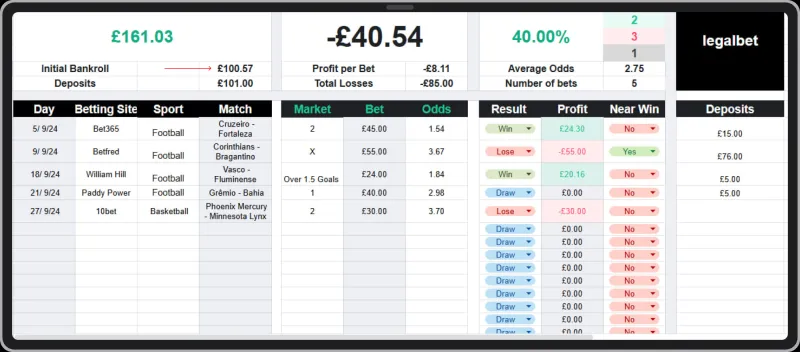
- Track everything. Profitable prop bettors keep records. It's the only way to know whether your edge is real or just variance.
Prop betting isn't a magic shortcut — it's a discipline. But for US bettors willing to do the legwork, the 2025 market is still full of spots where the books haven't caught up. Find those spots, manage your bankroll, and play the long game.