The Real Price Tag on Every Bet: How US Sportsbooks Quietly Extract Your Money
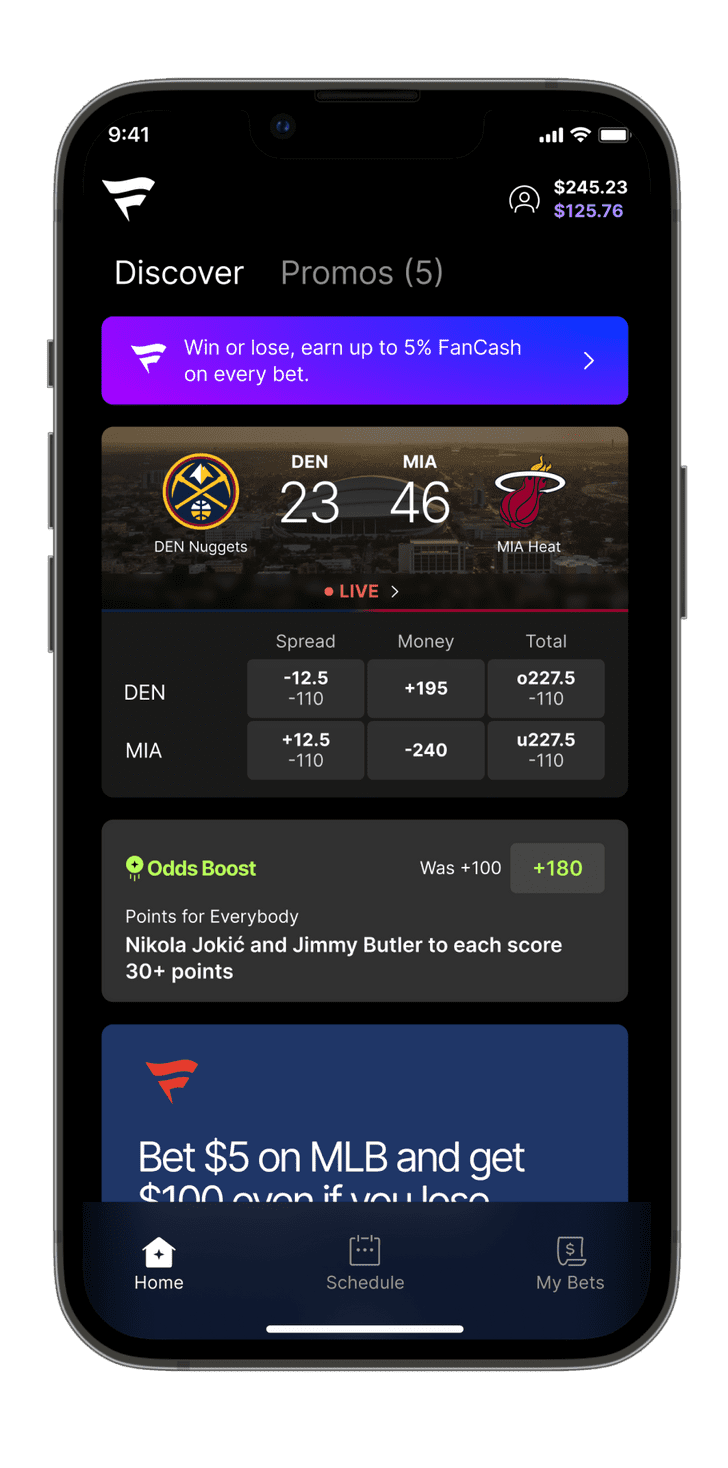
Photo: sportsbook mobile app betting odds screen with financial data overlay, via d9hhrg4mnvzow.cloudfront.net
When you walk into a car dealership, the sticker price is just the beginning. There's the dealer fee, the documentation charge, the add-on packages, the financing rate. By the time you drive off the lot, you've paid significantly more than you thought you were agreeing to.
US sportsbooks operate on a similar logic. The line you see on your screen is the sticker price. What you're actually paying — across juice, spread construction, bonus conditions, and withdrawal mechanics — is a different number entirely. And most bettors never calculate it.
Let's fix that.
Start With the Juice: What -110 Is Really Costing You
The standard American sports betting line is -110 on both sides of a spread or total. That means you bet $110 to win $100. Simple enough. But that asymmetry is where the sportsbook's profit lives.
Here's the arithmetic. If a book takes $110 from a bettor on each side of a game, they collect $220 in total action. They pay out $210 to the winner ($100 profit plus the original $110 stake). The book keeps $10. That's a roughly 4.5% margin on every single bet, regardless of which side wins.
That 4.5% is called the vigorish, or vig, or juice. It's the sportsbook's built-in commission — the fee you pay just for the privilege of placing the wager. It never goes away. It applies to every bet, every day, on every market.
For context: the house edge on American roulette is about 5.26%. Standard sportsbook juice on a spread bet is functionally in the same neighborhood. You're not getting a deal just because it's a skill-based activity.
Not All Juice Is Created Equal
The -110/-110 setup is the baseline, but US operators move juice constantly — and not always symmetrically. When sharp money or heavy public action hits one side, books often adjust by moving juice rather than the spread itself. You might see a line posted at -110/-110 and come back an hour later to find it sitting at -115/-105.
That five-cent shift matters more than it looks. Betting -115 instead of -110 raises your break-even win rate from 52.4% to 53.5%. Over hundreds of bets, that gap compounds into real money.
Some operators — particularly newer US market entrants competing aggressively for customers — have experimented with reduced juice, sometimes posting -105/-105 on select markets. That drops the margin significantly and genuinely improves your expected return. Shopping lines across multiple books isn't just about finding better spreads; it's about finding cheaper juice.
How the Spread Itself Becomes a Revenue Tool
Beyond the juice, the spread is itself a margin mechanism. Books don't set lines purely to predict outcomes — they set lines to balance action, or in some cases to shade toward where they want the liability to land.
When a book posts an NFL spread of -6.5 instead of -6, they're not just splitting hairs. Key numbers in football (3, 7, 10, 14) carry disproportionate value because games land on those margins frequently. A half-point on a key number can shift the true probability of a bet covering by 3-5 percentage points. The book knows this. The line price often doesn't fully reflect it.
Some operators also build in what traders call a "shading" — deliberately posting a line that's slightly off-center to encourage action on the side they'd rather have. If a book has taken heavy liability on Team A, they might post a line that makes Team B look artificially attractive, even if the true line would sit differently.
The 'Free Play' Bonus Illusion
Here's where a lot of US bettors get tripped up: the promotional math. Sportsbooks in states like New Jersey, Colorado, Illinois, and Arizona compete furiously on sign-up offers. "Bet $5, get $200 in bonus bets" is a common headline. It sounds transformative. It usually isn't.
Bonus bets — also called free plays or free bets depending on the operator — almost never pay out the stake amount. If you win a $50 bonus bet at -110, you collect your $45 profit, but the $50 stake disappears. You don't get to keep it. That cuts the real value of a bonus bet to roughly 45-50 cents on the dollar before you've even factored in the playthrough requirements.
Most US operators require bonus funds to be wagered one time before withdrawal. That sounds easy, but that single rollover still runs through the juice. A $200 bonus bet rolled over once at -110 costs you approximately $9 in vig just to clear it. Stack a few more requirements on top and the "free" money starts looking expensive.
Always read the terms on:
- Minimum odds requirements (many bonuses can't be used on heavy favorites)
- Time limits (bonus bets often expire within 7 days)
- Market restrictions (some promos exclude live betting or certain sports)
- Withdrawal minimums (some operators require a minimum deposit match before releasing funds)
Withdrawal Friction: The Quiet Cost Nobody Advertises
US sportsbooks don't typically charge explicit withdrawal fees — but they create friction in ways that cost you time and, indirectly, money. Processing times vary wildly. PayPal and Venmo withdrawals at major operators like DraftKings and FanDuel are usually fast. ACH bank transfers can take 3-5 business days. Some operators still process paper checks, which can take two weeks.
While your money sits in processing, it's not working for you. For high-volume bettors, that float matters. It also means your capital isn't available for live betting opportunities that require immediate action.
A few operators have also been known to request identity verification documentation mid-withdrawal — a completely legitimate anti-fraud measure, but one that can add days to the process if you haven't pre-verified your account. Do that step early.
Building Your True Expected Return Framework
Before you place a bet, run this quick mental checklist:
-
What's the actual juice on this line? Convert the American odds to implied probability on both sides and add them together. The sum above 100% is the book's margin.
-
Am I using a bonus bet? If so, discount its face value by roughly 50% to get the realistic expected value.
-
What's my estimated win rate on this bet type? If you don't have a tracked record, assume you're near the break-even threshold — because most bettors are.
-
Which book has the best price? A half-point or five cents of juice might seem minor on one bet. Across a season of wagering, it's the difference between a losing and a breakeven record.
Sportsbooks are businesses built on thin, consistent margins extracted from high volume. That's not a moral judgment — it's just the structure. At IconWin999, we think the best bettors are the ones who understand exactly what they're paying before they commit a dollar. Because once you see the full cost map, you can start making decisions that actually favor your bankroll.